-1200x630.png&w=3840&q=75)


The DPDP Rules 2025 were notified on 13 November 2025, and the substantive obligations take effect around 13 May 2027. Indian enterprises want to operationalise compliance now, not just document intent, and the market has filled fast with options. Some are genuinely India-native full stacks. Others are global tools with an India module bolted on.
This guide keeps it to the five platforms Indian enterprises actually shortlist against each other for full DPDPA compliance, with a clear pros and cons view of each. It builds on our earlier comparison of DPDP platforms and privacy automation tools and the closer look at consent tools versus full privacy platforms. Privy by IDfy is our platform, and it sits at the top, so we cover it first and in the most detail. The other four are real competitors, and the pros and cons for each are written to give you a fair read, not a strawman.
We have left out tools that solve only part of the problem, such as data-discovery-only platforms, pure consultancies, and consent-banner point tools. They are useful in their niches, but they are not what you weigh up when you need the full obligation stack.
What Actually Separates These Platforms
Three things decide whether a platform satisfies your DPDPA obligations or just helps you look busy. First, DPDPA specificity: does it handle Rule 3 notices, the India-incorporated consent manager role, data principal rights, and SDF duties natively, or through GDPR configuration? Second, breadth: DPDPA spans consent, data principal rights, discovery and mapping, PIAs, vendor risk, incident response, and audit trails. A tool covering three of those forces your team to stitch the rest together, and it is worth checking the depth of each area against dedicated comparisons such as the top DPIA tools in India and the best TPRM tools for 2026. Third, India credibility: an India-incorporated team, named enterprise customers in regulated sectors, and a regulatory-update cadence that keeps pace as the Data Protection Board issues guidance.
Before shortlisting any platform, two prior questions are worth settling: whether to build in-house or buy at all, covered in the build versus buy analysis for DPDP compliance, and what the programme will actually cost, covered in the CFO's guide to DPDPA compliance cost. Both frame the budget you bring to a platform decision.
1. Privy by IDfy
Privy by IDfy is India's full-stack DPDPA compliance platform, built by IDfy, a company with 14 years of India-native identity and regulatory infrastructure behind it. IDfy runs identity verification for Axis Bank, HSBC, and hundreds of other BFSI and fintech enterprises. Privy was built on that foundation for DPDPA specifically, and it won the MeitY DPDP Innovation Challenge, the Indian government's own evaluation of consent manager infrastructure.
It covers all seven core workflows across three pillars. Pillar 1 handles the consent lifecycle: the consent governance platform manages Rule 3 notice delivery, multilingual consent across the 22 scheduled languages, and versioned consent records, alongside data principal rights management and cookie management.
Pillar 2 handles continuous compliance and risk: privacy impact assessments and DPIAs, incident and 72-hour breach management, and third-party risk management.
Pillar 3 is Data Compass, which discovers and classifies personal data across structured, unstructured, cloud, on-premise, and endpoint systems, then maps it and enforces retention, the discovery-and-mapping foundation that the rest of a DPDP programme rests on.
InspectAI, the AI co-pilot layer described on Privy's platform overview, scans live journeys, flags consent misalignments, and triggers PIAs or vendor reviews when it detects risk.
Pros
 Covers the full DPDPA obligation stack in one evidence-backed system, so a regulator inquiry gets one audit trail rather than seven spreadsheets.
- The only India platform with a government-validated consent manager designation from the MeitY challenge, which matters because foreign platforms are structurally excluded from the consent manager role.
- Deep BFSI credibility through IDfy: Axis Bank, Axis Finance, and HSBC as named customers, plus 14 years of regulated-sector identity work.
- India-incorporated and India-supported, with regulatory intelligence built into the update cadence.
- Strong SDF fit, including algorithmic due diligence and enhanced audit-trail workflows.
Cons
- A full-stack platform is more than a 20-person startup with simple data estate needs. Small teams may find lighter tools sufficient for now.
- Breadth means the initial configuration spans more modules than a single-workflow tool, so onboarding rewards a defined implementation plan.
Best for. Enterprises that need the complete obligation stack, regulated sectors such as BFSI, fintech, insurance, and healthcare, and any organisation expecting Significant Data Fiduciary designation or needing consent manager eligibility.
2. Securiti.ai
Securiti markets itself as a Data Command Center that folds privacy, security, and governance into one platform, with AI-driven data discovery across multi-cloud estates connected to consent and rights workflows. It is a genuinely strong enterprise platform and appears in most India comparison guides as the leading full-stack global option after the incumbents.
Pros
- Very broad: data discovery and DSPM, consent, assessments, rights management, vendor risk, and AI governance.
- Deep multi-cloud coverage and a data-relationship graph that suits large, fragmented data estates.
- High global trust signals and a large enterprise customer base.
Cons
- Architecture and defaults are built around GDPR and US privacy laws, so India-specific workflows need configuration to align with the Rules and Board expectations.
- Not India-incorporated, so it cannot fill the consent manager role under the Act.
- Enterprise-scale implementation investment; usually overkill for mid-market teams.
Best for. Large enterprises with complex multi-cloud data estates and an existing global privacy programme like GDPR that want DPDP handled inside a broader governance platform.
3. OneTrust
OneTrust is the global market leader in privacy management software, used across GDPR, CCPA, and dozens of other frameworks. Its breadth is unmatched, and Indian multinationals already running it for GDPR often extend it to DPDPA rather than adopt a new tool.
Pros
- Extremely broad module set, deep integration library, and mature workflows.
- Very high trust signals, long market presence, and independent certifications.
- The path of least resistance for multinationals already standardised on it.
Cons
- Built for GDPR and extended to DPDPA through configuration, which adds implementation time and cost for India-specific requirements.
- A US-incorporated entity cannot operate as a consent manager under the Act, so a supplementary India solution is needed if registration matters.
- High total cost of ownership, typically suited to companies with dedicated privacy-operations teams. USD-based pricing scales aggressively with data volume.
Best for. Multinational enterprises already invested in OneTrust for global compliance that want to add an India module and can absorb the configuration overhead.
4. Seqrite
Seqrite is Quick Heal's enterprise privacy and security platform, one of the few India-incorporated cybersecurity companies with a dedicated DPDPA product. It comes at privacy from the security side, connecting data discovery and consent to endpoint protection and Zero Trust controls.
Pros
- Fully India-native and India-operated, with features updated in response to the 2025 Rules.
- Strong security integration: the privacy modules connect to Seqrite's endpoint, XDR, and network security stack, reducing vendor count for security-led teams.
- An established, trusted Indian brand through Quick Heal.
Cons
- Privacy-governance depth trails the compliance-native platforms; incident-response and vendor-risk modules are lighter than Privy's.
- The security-first framing fits security teams well but can feel less natural for a legal or privacy-led programme.
- Premium pricing and longer deployment timelines for pure DPDP needs.
Best for. Enterprises that want privacy compliance and cybersecurity on one connected platform, especially those already running Quick Heal or Seqrite endpoint products.
5. Redacto
Redacto is an India-based, AI-first privacy compliance startup founded in 2025 that built its platform around DPDP workflows from the start. Its modules span consent, data mapping and classification, vendor risk, DPIA workflows, and breach dashboards, and it is positioned as the DPDP-native challenger.
Pros
- Built for DPDP from inception, so consent, rights, and vendor workflows are India-aware rather than retrofitted.
- Lean and fast to deploy, with a lighter implementation than the larger platforms.
- Supports SaaS, private-cloud, and on-premise deployment, with customers across BFSI, healthcare, and pharma.
Cons
- Founded in 2025, so it lacks the multi-year India track record and the enterprise-anchor customers of the established players.
- No government consent manager validation equivalent to the MeitY designation.
- SDF-specific depth, including algorithmic due diligence, is less publicly documented than the full-stack incumbents.
Best for. Mid-market Indian enterprises that want a lean, India-built DPDP platform with a faster sales cycle and lighter implementation.
Why Start Your Evaluation with Privy
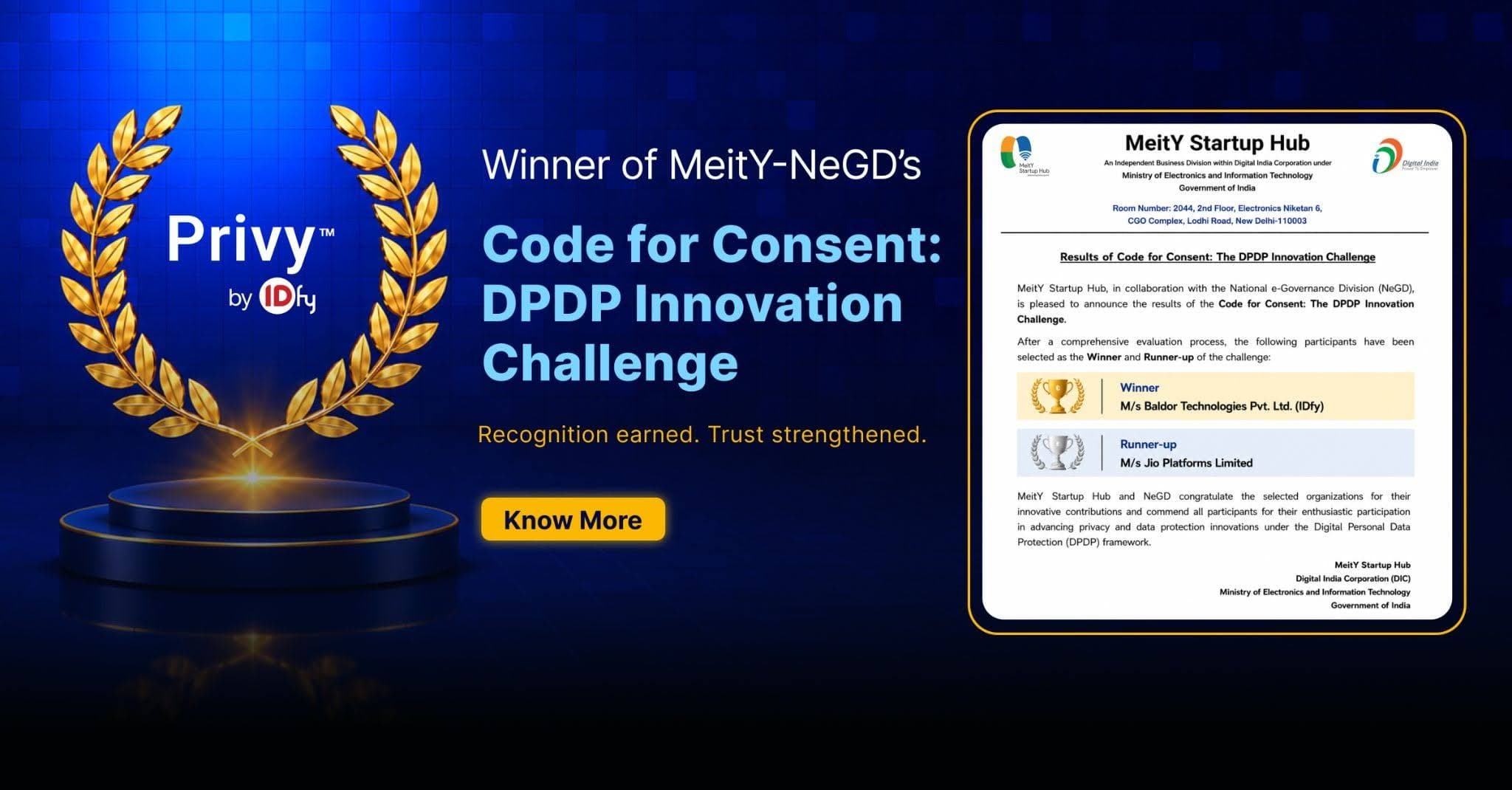
Privy is the winner of MeitY's Code for Consent Challenge and is trusted by 30+ enterprises across banking, insurance, fintech, telecom, retail, healthcare, manufacturing, and other regulated industries. Instead of evaluating theoretical capabilities, start with a platform that combines government-recognised innovation with proven enterprise adoption and is purpose-built for India's DPDP compliance requirements. To know more about the DPDP Innovation Challenge by MeitY, click here
.png&w=3840&q=75)
Where Privy Fits, In One Line
Privy is built on the view that most of DPDPA compliance is data governance, not consent forms alone. Its DPDPA compliance platform connects all the obligation areas into one system that shares a single audit trail, so evidence for a Data Protection Board inquiry comes from one record. No platform removes a fiduciary's legal accountability. What Privy gives compliance, legal, and security teams is the workflows, the data, and the evidence to exercise that accountability operationally.
Conclusion
India's DPDP platform market is crowded, but the shortlist for a full-stack decision is short. Privy, Securiti, OneTrust, Seqrite, and Redacto are the platforms enterprises genuinely compare. The differences between them are real: government validation, India incorporation, breadth, and enterprise credibility decide whether a platform satisfies your obligations or just helps you document the attempt.
Privy by IDfy is the one we would put forward for enterprises that need the full stack, BFSI credibility, consent manager eligibility, and an evidence system that holds up under a Data Protection Board inquiry. If your needs differ, the pros and cons above are written to help you find the right fit.
To discuss your specific requirements or see how Privy covers your full DPDPA obligation set, write to shivani@idfy.com.
FAQ's
What is the best DPDP compliance platform in India?
For enterprises needing the full obligation stack with government-validated consent manager infrastructure, Privy by IDfy is the strongest option. For a lean India-first deployment, Redacto is worth evaluating. Multinationals already on OneTrust or Securiti often extend those with India configuration.
Can a foreign platform like OneTrust operate as a consent manager under DPDPA?
No. The DPDP Act requires consent managers to be India-incorporated entities with a minimum net worth of ₹2 crore. US or EU-incorporated platforms are structurally ineligible. Privy, through IDfy, is India-incorporated and was validated by MeitY in the DPDP Innovation Challenge.
What separates a consent management platform from a full DPDPA compliance platform?
A consent management platform handles consent collection, notice delivery, and consent records. A full DPDPA platform also covers data principal rights, discovery and mapping, PIAs, vendor risk, incident management, and audit trails. Cookie banners alone do not amount to DPDPA compliance.
When do DPDPA obligations take effect?
The DPDP Rules 2025 were notified on 13 November 2025. Most substantive obligations take effect around 13 May 2027, the 18-month mark. Consent manager registration opens around November 2026.
What is the penalty for non-compliance?
Section 8(5) provides for penalties up to ₹250 crore for failing to implement reasonable security safeguards. Other categories carry their own maximums, and penalties are assessed per violation rather than as annual caps.