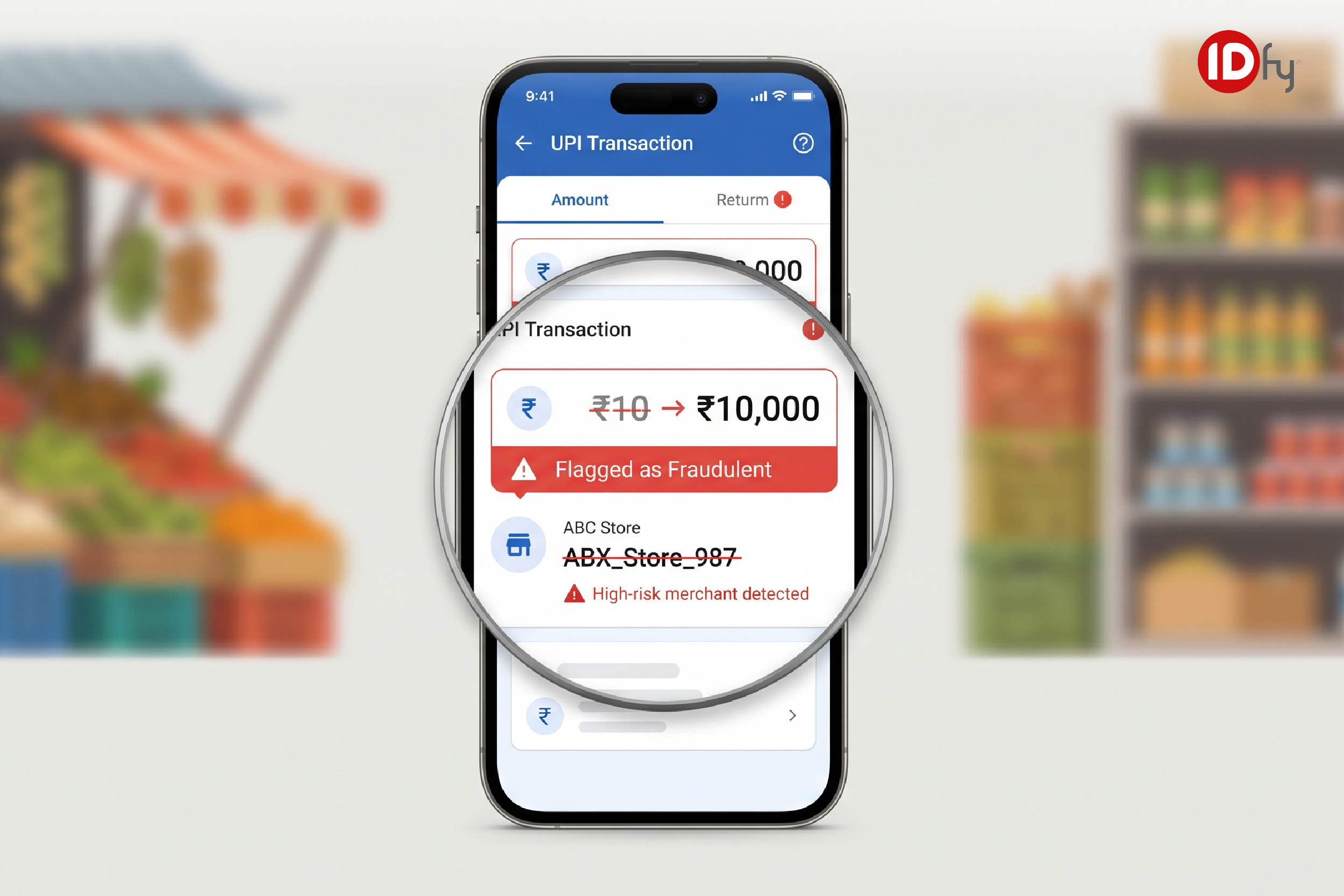
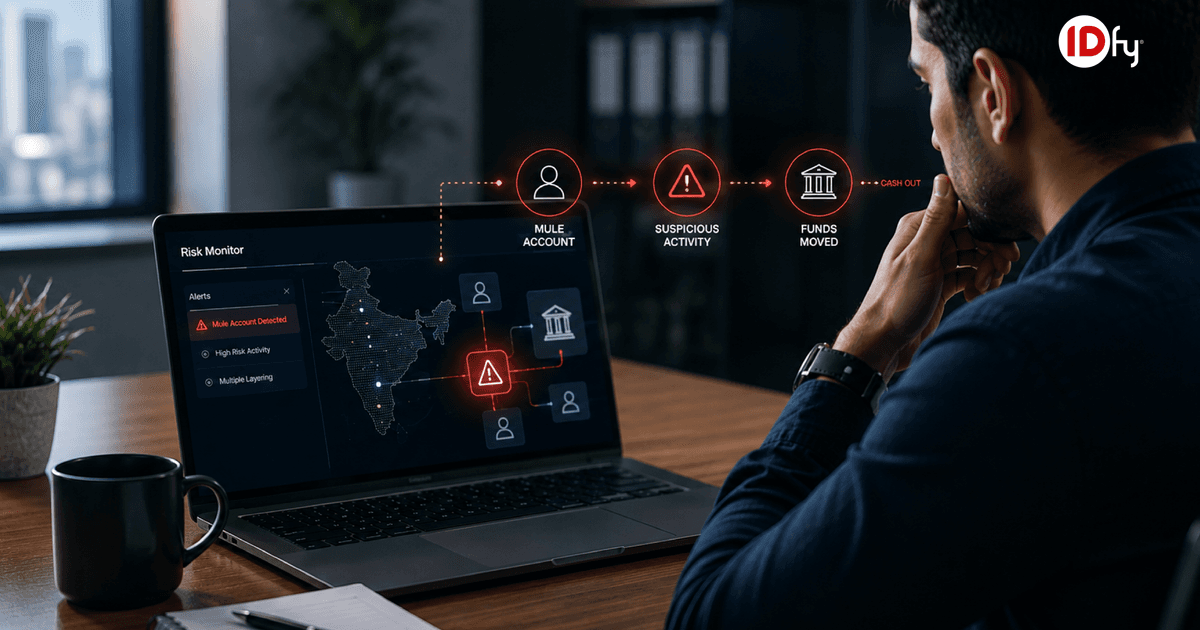


More than 2.47 million Layer-1 mule accounts have been flagged by the Indian Cyber Crime Coordination Centre (I4C) as of early 2026. Each one is a bank or payment account that fraudsters used to receive, hold, or move stolen money before it disappeared into a chain of further transfers, withdrawals, and conversions that investigators struggle to trace.
For payment businesses, this is no longer a problem that banks alone are expected to solve. Mule account detection has moved from a compliance footnote to a regulatory mandate with a hard deadline, and the entities onboarding and processing these accounts sit right at the point where the fraud pipeline can be stopped before money moves.
What Is a Mule Account
A mule account is any account used to receive or transfer funds obtained through fraud, scams, or other illegal activity, operated by someone other than the person actually running the criminal scheme. The account holder is called a money mule.
Money mules fall into two broad categories. Some know exactly what they're doing, recruited through underground networks in exchange for a commission on every transaction they route. Others have no idea they're part of a fraud chain, having handed over their account credentials or KYC documents after a fake job offer, a loan promise, or a "digital arrest" scam that pressured them into cooperating. Both are liable under the Prevention of Money Laundering Act (PMLA), regardless of intent, which is part of why the problem has proven so hard for law enforcement to unwind cleanly.
What makes mule accounts distinct from other fraud typologies is function, not form. The account itself often looks legitimate, complete with valid KYC. It's the pattern of use, layered through account activity, that flags it. Fraudsters typically route stolen funds through three or four mule accounts in quick succession, splitting and re-combining amounts to break the transaction trail before investigators can follow it to a final withdrawal point.
Why Payments Companies Carry This Risk, Not Just Banks
Mule account discourse in India has largely centered on banks, because that's where MuleHunter.AI first rolled out. But the mule economy doesn't stop at the bank account. It routes through the full payments stack.
Payment aggregators onboard merchants whose settlement accounts can be structured as mule endpoints. PPI issuers process wallet top-ups and transfers that move faster and with less friction than bank rails, making them attractive for rapid layering. And business correspondent (BC) networks, used heavily by fintechs and NBFCs to extend reach into semi-urban and rural India, present a distinct exposure: accounts opened through compromised or negligent BC agents can enter the system as synthetic mules from day one, with fraudulent intent baked into onboarding rather than developing later.
This means detection built solely around bank-style transaction monitoring misses a meaningful share of the exposure. A payments entity needs to catch risk signals at onboarding, not just downstream in the transaction flow.
The Regulatory Pressure Point in 2026
Three developments have converged this year to make mule account detection a compliance deadline rather than a best practice:
 MuleHunter.AI is scaling fast
Built by the Reserve Bank Innovation Hub (RBIH), the AI/ML tool analyzes nineteen distinct behavioural patterns associated with mule accounts and can detect roughly 20,000 suspect accounts per month. As of late 2025, 23 banks had implemented it, including Canara Bank, Punjab National Bank, Bank of India, and Bank of Baroda, with Canara Bank reporting a 95% detection accuracy rate. Another wave of banks has since entered rollout.
- The integration deadline is fixed
The Ministry of Home Affairs has directed all financial institutions to integrate with MuleHunter.AI by December 2026. That includes the broader payments ecosystem, not banks in isolation, and it converts what was a voluntary RBI initiative into a compliance requirement with teeth.
- The Supreme Court has stepped in
In an August 2026 order in the matter concerning victims of digital arrest scams, the Court directed RBI to formally adopt and circulate a Standard Operating Procedure for mule accounts and cyber-fraud-linked accounts within four weeks. The SOP is expected to cover temporary debit holds on suspect accounts and formalize data-sharing between RBI and I4C's Suspect Registry, an MoU for which was already signed by RBIH and I4C earlier in 2026.
Together, these three threads mean payments entities are entering a period where mule-linked accounts will surface faster, in higher volumes, and with clearer regulatory expectations attached to what happens next.
Red Flags: What Detection Actually Looks For
Mule account detection works by pattern, not by any single red flag. The Indian Banks' Association and RBI's own guidance point to indicators across three layers.
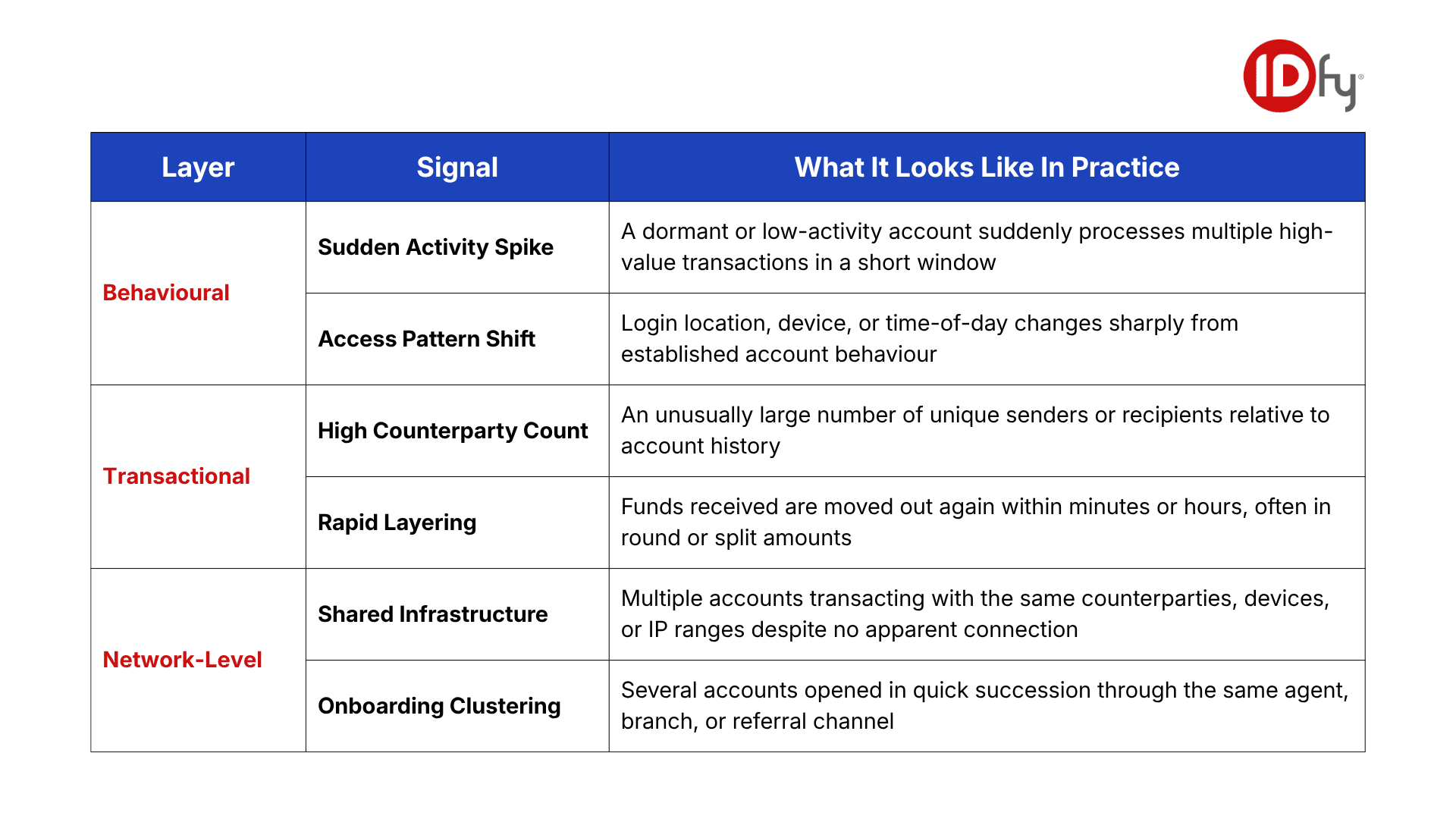
Key behavioural, transactional, and network signals for detecting mule accounts
No single signal is conclusive on its own. A genuine small business can show a sudden spike in transactions during a seasonal peak. The strength of tools like MuleHunter.AI is correlating these signals across an account's full behavioural profile, and increasingly, across accounts at other institutions through shared registries like I4C's.
Building Detection Capability: An Operational Framework
Most payments entities don't have a bank's investigation-team scale. Building credible mule account detection capability doesn't require replicating one. It requires getting the sequencing right.
- Start upstream, at onboarding
Identity verification at the point of account opening is the cheapest and most effective control available. Verifying that the person opening an account is who they claim to be, and that their KYC documents haven't been reused or manipulated across multiple onboarding attempts, closes off a meaningful share of the synthetic mule pathway before it ever reaches transaction monitoring.
- Treat BC channels as a distinct risk layer
If your onboarding runs through business correspondents or assisted channels, build monitoring specifically for agent-level anomalies, not just account-level ones. Independent, periodic re-verification of accounts opened through these channels catches negligent or compromised agent activity that account-level rules alone will miss.
- Model your alert volume before MuleHunter integration hits
Institutions integrating with MuleHunter.AI should expect a step-change in flagged accounts, not a gradual ramp. Estimate expected alert volume against your account base now, and assess whether your current investigation and STR-filing capacity can absorb it without creating a backlog that itself becomes a compliance gap.
- Build for data-sharing, not just internal monitoring
With RBI and I4C moving toward shared suspect-registry data, detection systems that can consume and act on external suspect flags, not just internally generated ones, will have a real edge over closed, self-contained monitoring stacks.
What This Means Going Into 2027
Mule account detection is shifting from a banking-sector initiative to a shared payments-ecosystem responsibility, and the shift is being enforced through hard deadlines rather than voluntary adoption. Payments entities that treat the December 2026 integration mandate as the starting point for building capability will be doing so under alert-volume pressure and regulatory scrutiny at the same time.
The entities that get ahead of it share one trait: they've pushed detection upstream, to the point of onboarding, where identity verification can stop a synthetic mule account from ever being created, rather than relying entirely on catching suspicious behaviour after the fact.
FAQs
- What is a mule account and how is it different from a fraudulent account?
A mule account is a legitimate account, often opened with valid KYC, that's used to receive or move funds obtained through fraud. The account itself isn't fake. It's the pattern of use, layering stolen money through transfers, that identifies it as a mule account.
- Is operating a mule account illegal even if the holder didn't know?
Yes. Under the Prevention of Money Laundering Act, account holders can be held liable regardless of whether they knowingly participated or were deceived into handing over their account. This is a key reason regulators are pushing detection upstream rather than relying solely on after-the-fact prosecution.
- What is RBI's MuleHunter.AI and how does it work?
MuleHunter.AI is an AI/ML tool developed by the Reserve Bank Innovation Hub that analyzes nineteen behavioural patterns linked to mule accounts, detecting roughly 20,000 suspect accounts per month across participating banks, with reported accuracy rates as high as 95% at some institutions.
- What is the December 2026 deadline payments companies need to know about?
The Ministry of Home Affairs has directed all financial institutions, not just banks, to integrate with MuleHunter.AI by December 2026, making mule account detection a compliance requirement with a fixed deadline rather than a voluntary initiative.
- How can payment aggregators and fintechs detect mule accounts without bank-scale investigation teams?
By prioritizing onboarding-stage identity verification as the first line of defense, building distinct monitoring for BC-channel risk, and modeling expected alert volume ahead of MuleHunter integration so investigation capacity isn't caught off guard.
Strong onboarding-stage identity verification is the most effective upstream control against mule account risk. See how IDfy helps payments companies verify identity and catch synthetic account risk before it reaches transaction monitoring.